Kauaeranga Valley
The Kauaeranga Valley was once filled with
magnificent kauri trees. From the 1870s to the 1920s, this area was extensively logged for its
kauri. At first the easier slopes near Thames were logged and the kauri milled locally. During
the 1890s the kauri timber industry slumped and many local mills closed down. Around 1910 the
industry revived and plans were made to extract the remaining stands of timber in the rugged
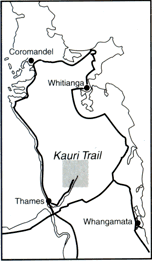
area above Kauaeranga Gorge - the area now traversed by the Kauri Trail (see below).
 In the main river valley
and its tributaries, contractors worked from bush camps supplied by packhorse track. Using axe,
saw and timber jack, they felled thousands of massive trees, which were trimmed, cut to length
and transported to streams, and rivers via log chutes or along skidded roads. Dams were built in
the valley and often tripped in sequence to send timber down the river.
In the main river valley
and its tributaries, contractors worked from bush camps supplied by packhorse track. Using axe,
saw and timber jack, they felled thousands of massive trees, which were trimmed, cut to length
and transported to streams, and rivers via log chutes or along skidded roads. Dams were built in
the valley and often tripped in sequence to send timber down the river.
Tramlines were also used to move logs. The most
spectacular example being the Billygoat tramline, which was built to bypass the Billygoat Falls.
Logs were damaged beyond use going over the falls so an alternative means of transport was
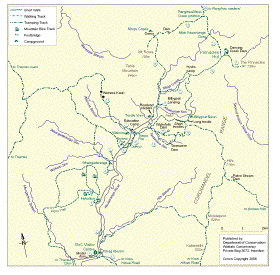
developed to get the logs to market. Part of the Kauri Trail walk (see below) takes in remnants
of the old tramline. ( Map kindly supplied by DOC )
By 1928 most of the kauri had been logged! The
tramline was pulled up and the dams, bush camps and other relics fell into ruin as Kauaeranga
forests slowly recovered. In 1970 the remaining native forests of the Kauaeranga were protected
as part of the Coromandel Forest Park.
The Kauaeranga Valley provides an extensive
variety of walking for all abilities. There are lots of different walks in the Kauaeranga
Valley ranging anywhere from 15 minutes to 8 hours
For detailed
track information, collect a DOC brochure from any of the Coromandel Information centres or
the Kauaeranga DOC Visitor centre up the valley.
Kauaeranga Kauri Trail
 A track steeped in Kauri
logging history. Remnants of the logging days can be seen on the track and in fact, the
track itself follows the old packhorse track that took supplies up to the kauri loggers
working and living in the hills. Giant kauri stumps, abandoned logs, kauri dams and old
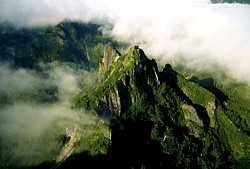
tramlines can also be seen on this walk. The highlight of the trip is the last section of
the track which is a steep climb leading to the jagged summit of the Pinnacles. Walkers are
rewarded with magnificent panoramic views of the Coromandel region.
A track steeped in Kauri
logging history. Remnants of the logging days can be seen on the track and in fact, the
track itself follows the old packhorse track that took supplies up to the kauri loggers
working and living in the hills. Giant kauri stumps, abandoned logs, kauri dams and old
tramlines can also be seen on this walk. The highlight of the trip is the last section of
the track which is a steep climb leading to the jagged summit of the Pinnacles. Walkers are
rewarded with magnificent panoramic views of the Coromandel region.
Tip: A visitor centre is located at Kauaeranga Valley
on the way to the start of the Pinnacles Walk. At the Visitor Centre there is an
audio-visual show and displays that inform visitors about the history of the
valley.

|
Directions: Take the
signposted turn from State Highway 25 opposite the Toyota factory at the southern
entrance to Thames. Kauaeranga Visitor Centre is 13kms up the valley and this is where
hut tickets can be picked up or collected. The start of the Kauaeranga Kauri trail is
at the Kauaeranga Valley road end, nine kilometers from the visitor
centre.
Length: 8 hours round trip. This walk can be done
in one day however it can also be done as an overnight staying at the Pinnacles Hut.
It is an approx three-hour walk to the Pinnacles Hut then a two-hour return trip to
the Pinnacles from the hut. The hut is a modern eighty-bunk hut.
Note: Care must be taken at the summit. Walkers
will be required to do a bit of scrambling up rocks. It is recommended that visitors book the
hut in advance particularly if walking the track during the weekend. Mid-week walking
is recommended as there are fewer people walking the
track.
For Guided Walks: Walking Legends Guided
Walks
|
To book contact the Kauaeranga Visitor
Centre
Email: [email protected]
Telephone: + 64 7 867 9080
There are also a number of campgrounds in the
Kauaeranga Valley that provide easy access to the walking tracks, mountain bike tracks, the
historical sites and spectacular valley scenery.
 previous page
  back to home page
T